
LEONARDO DA VINCI
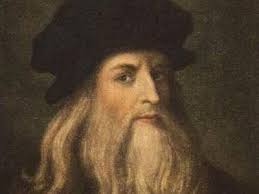
Leonardo da Vinci (1452-1519) was an Italian artist, inventor, and polymath who is widely regarded as one of the greatest geniuses in history. His works include some of the most famous paintings in the world, such as the Mona Lisa and The Last Supper, as well as numerous inventions and designs that were ahead of their time.
Early Life and Education: Leonardo da Vinci was born on April 15, 1452, in the town of Vinci, near Florence, Italy. He was the illegitimate son of Ser Piero da Vinci, a wealthy notary, and Caterina, a peasant woman. Leonardo was raised by his father’s family and received his early education in the Tuscan countryside.
As a young man, Leonardo showed a talent for drawing and painting, and in 1469 he was apprenticed to the artist Andrea del Verrocchio in Florence. During his apprenticeship, Leonardo learned a wide range of skills, including painting, sculpting, and metalworking, as well as the techniques of fresco and oil painting.
Artistic Career: Leonardo’s artistic career began in earnest in the 1480s, when he received commissions to paint several important religious works. He also began to develop his own style, which was characterized by a focus on realism, meticulous attention to detail, and a subtle use of light and shadow.
Some of Leonardo’s most famous works from this period include The Last Supper, a mural painted on the wall of a Dominican convent in Milan, and the Mona Lisa, a portrait of a woman believed to be Lisa Gherardini, the wife of a Florentine merchant.
In addition to his paintings, Leonardo also designed costumes and sets for theatrical productions, created architectural plans, and made anatomical studies of the human body.
Scientific and Inventive Achievements: Leonardo was not just an artist but also a scientist and inventor. He was interested in many fields, including engineering, anatomy, botany, and astronomy, and he made important contributions to each of these fields.
Some of Leonardo’s most notable inventions include designs for a flying machine, a submarine, and a tank. He also made numerous advances in the study of anatomy, including the first accurate drawings of the human skeleton and the circulatory system.
Leonardo’s notebooks, which he kept throughout his life, contain thousands of pages of sketches, notes, and ideas. These notebooks are considered some of the most valuable documents in the history of science and art.
Later Life and Legacy: In his later years, Leonardo moved to France, where he worked as an artist and engineer for King Francis I. He died on May 2, 1519, at the age of 67.
Leonardo’s legacy has been profound and far-reaching. His artistic and scientific achievements have influenced countless artists and thinkers throughout history, and his ideas and inventions continue to inspire new generations of innovators. Today, Leonardo da Vinci is widely regarded as one of the greatest minds in history and a true Renaissance man.
Education:
- Childhood Education: Leonardo was born out of wedlock to a notary and a peasant woman. His early education was informal and took place in his father’s house, where he learned reading, writing, and arithmetic. Later, he received some basic education in grammar, literature, and music from a local teacher.
- Apprenticeship under Verrocchio: At the age of 14, Leonardo became an apprentice in Verrocchio’s workshop. There he learned painting, sculpture, metalworking, and drafting. He learned how to mix colors, prepare surfaces, use brushes, and draw figures from life. Verrocchio’s workshop was a center of artistic and intellectual activity, where Leonardo interacted with other artists, scholars, and patrons.
- Independent Learning: Even after completing his apprenticeship, Leonardo continued to learn on his own. He read books on mathematics, mechanics, anatomy, and optics. He visited hospitals and dissected human and animal bodies to study anatomy. He observed nature and made sketches of plants, animals, and landscapes. He also experimented with various materials and techniques, such as oil painting, fresco, and metal casting.
- Informal Mentors: Leonardo had several informal mentors throughout his life, including the mathematician Luca Pacioli, the physician Marcantonio della Torre, and the philosopher Marsilio Ficino. He also corresponded with other intellectuals, such as the astronomer Johannes Kepler and the philosopher Francis Bacon.
ACHIEVEMENTS:
- Artistic Achievements: Leonardo is best known for his paintings, including the Mona Lisa and The Last Supper. His artwork is characterized by its realism, attention to detail, and use of perspective. He was also an accomplished sculptor and created several notable pieces, including a large equestrian statue that was never completed.
- Scientific Achievements: Leonardo was fascinated by the natural world and made numerous observations and discoveries during his lifetime. He conducted anatomical studies of the human body, which allowed him to create detailed drawings of muscles, bones, and organs. He also studied the flight of birds and designed flying machines based on his observations.
- Engineering Achievements: Leonardo was a skilled engineer and designed several machines, including a mechanical knight, a revolving bridge, and a parachute. He also developed ideas for machines that could be used in warfare, such as a tank and a machine gun.
- Architectural Achievements: Leonardo designed several buildings and structures, including a palace for the French king and a cathedral that was never built. He also designed a system of canals and locks that would allow ships to travel between Milan and the sea.
- Literary Achievements: Leonardo was a prolific writer and kept detailed notebooks that contained his thoughts, ideas, and observations. He wrote about a wide range of topics, including art, science, engineering, and philosophy.
- Inventions: Leonardo is credited with inventing several machines that were ahead of their time, including a flying machine, a submarine, and a diving suit. Although many of his designs were never built during his lifetime, they have inspired later inventors and designers.
In conclusion, Leonardo da Vinci was a true Renaissance man who made significant contributions to art, science, engineering, and literature. His legacy continues to inspire people today, and his achievements have had a profound impact on the world.
Overall, Leonardo da Vinci’s education was a combination of formal apprenticeship, independent learning, and interaction with mentors and peers. He was a curious and voracious learner who pursued knowledge in various fields, not just in art. His education was not limited to a particular institution or curriculum, but was a lifelong pursuit of excellence in all aspects of human endeavor.