
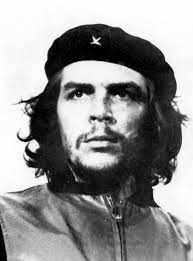
Ernesto “Che” Guevara
Ernesto “Che” Guevara was an Argentine Marxist revolutionary, physician, author, guerrilla leader, and military theorist who played a key role in the Cuban Revolution. He was born on June 14, 1928, in Rosario, Argentina, to a middle-class family of Spanish and Irish descent. His parents were Celia de la Serna y Llosa and Ernesto Guevara Lynch, who was an architect. Ernesto Guevara was the eldest of five children and was known for his rebellious nature from a young age.
Education
Che Guevara studied medicine at the University of Buenos Aires in 1948. During his studies, he took a year off to travel around South America on a motorcycle with his friend Alberto Granado. They visited various countries, including Chile, Peru, and Venezuela, and witnessed the poverty and inequality that existed in those countries. This experience had a profound impact on Guevara, and he later wrote about it in his book “The Motorcycle Diaries.”
Social and Political Views
After completing his medical studies, Che Guevara became involved in politics and social justice issues. He was a member of several left-wing organizations, including the Argentine Communist Party and the Radical Student Union. He was also an admirer of the Marxist revolutionary Fidel Castro, who was leading a guerrilla war against the Cuban government.
In 1954, Guevara went to Mexico City, where he met Fidel Castro and joined his revolutionary movement. He became one of Castro’s top advisors and military commanders and played a key role in the Cuban Revolution, which lasted from 1956 to 1959. During the revolution, Guevara became known for his bravery and leadership skills and was instrumental in the defeat of the Cuban government’s army.
Achievements
After the Cuban Revolution, Che Guevara held several important positions in the new government. He served as the Minister of Industries, where he helped to modernize and diversify the Cuban economy. He was also a key figure in the development of Cuba’s healthcare system, which is considered to be one of the best in the world.
Guevara was a prolific writer and author, and he wrote several books on politics and revolutionary theory, including “Guerrilla Warfare” and “The Motorcycle Diaries.” He was also a talented speaker and gave many speeches and lectures on the importance of socialism and social justice.
Tragedy
In 1965, Che Guevara left Cuba and went to Bolivia to continue his revolutionary activities. However, he was captured by the Bolivian government and executed on October 9, 1967. His death was a blow to the international socialist movement, and he became a symbol of revolutionary struggle and anti-imperialism around the world.
Legacy
Che Guevara’s legacy has been controversial, with some seeing him as a hero and others as a villain. He is admired by many for his commitment to social justice and his willingness to fight for what he believed in. He is also remembered for his revolutionary ideas and his contributions to the socialist movement.
However, he has also been criticized for his authoritarian tendencies and his role in the execution of political dissidents in Cuba. His image has been commodified and used for commercial purposes, with his face appearing on t-shirts, posters, and other merchandise around the world.
Conclusion
Ernesto “Che” Guevara was a complex and controversial figure, whose life and legacy continue to inspire and challenge people around the world. He was a passionate and committed revolutionary who believed in the power of the people to change the world. Although he died young, his ideas and his example continue to influence political and social movements around the world.