
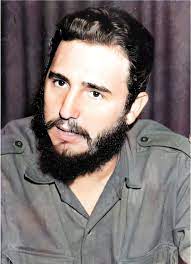
Fidel Castro
Introduction
Fidel Castro, one of the most prominent figures in modern history, was a Cuban revolutionary and politician who led Cuba for nearly five decades. Born on August 13, 1926, in Biran, Cuba, Castro was the son of a wealthy landowner who owned a large sugar plantation. He grew up in a privileged environment and was educated at some of the best schools in Havana. Despite his privileged upbringing, Castro was deeply committed to the plight of the poor and marginalized, and he spent his entire life fighting for their rights.
Social and Education Background
Fidel Castro was born into a wealthy family, but his upbringing was far from typical. His father, Angel Castro y Argiz, was a wealthy landowner who owned a large sugar plantation in eastern Cuba. Despite his wealth, Angel was not a typical member of the Cuban elite. He was deeply committed to the cause of Cuban independence from Spain, and he supported a number of revolutionary movements throughout his life. Fidel’s mother, Lina Ruz Gonzalez, was a domestic worker who had come to work on the Castro family’s sugar plantation.
Despite his privileged background, Fidel Castro was deeply committed to the cause of social justice from an early age. He was a gifted student who excelled in all his studies, and he was especially interested in history and politics. In 1945, he enrolled at the University of Havana, where he studied law and became involved in the student political movement. He soon became a leader of the student movement and was known for his passionate speeches and his commitment to social justice.
In 1947, Fidel Castro joined a group of students who attempted to overthrow the Cuban government. The plot failed, and Castro was arrested and sentenced to 15 years in prison. He was eventually released after serving only two years, and he went into exile in Mexico, where he began planning a new revolution.
Achievements
Fidel Castro is perhaps best known for his role in the Cuban Revolution, which he led in the late 1950s. The revolution began in 1953, when Castro and a group of supporters attempted to overthrow the Cuban government in a failed attack on the Moncada Barracks in Santiago de Cuba. Castro was captured and imprisoned, but he was eventually released in 1955 as part of a general amnesty.
Castro went into exile in Mexico, where he continued to organize the revolutionary movement. In 1956, he and a group of supporters, including the Argentine revolutionary Che Guevara, sailed to Cuba on the yacht Granma. The group landed in Cuba, but they were immediately attacked by government forces. Only a handful of the revolutionaries survived, including Castro and Guevara, and they retreated to the Sierra Maestra mountains, where they began a guerrilla war against the government.
The revolutionaries gradually gained support from the Cuban people, and by 1959, they had successfully overthrown the government of Cuban dictator Fulgencio Batista. Castro became the leader of the new government, and he quickly set about implementing a series of radical reforms. He nationalized the country’s land, factories, and other industries, and he instituted a system of state-run healthcare and education. He also aligned Cuba with the Soviet Union, which led to a long-standing alliance between the two countries.
Under Castro’s leadership, Cuba became a major player in international politics, and Castro himself became a prominent figure on the world stage. He was known for his passionate speeches and his commitment to socialist ideals, and he was seen as a hero by many in the developing world.
Tragedy and Controversy
While Fidel Castro was widely revered by many in Cuba and around the world, his leadership was not without controversy. Critics accused him of being a dictator who suppressed