
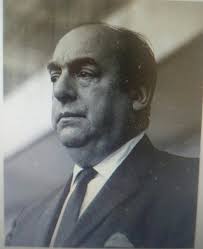
Pablo Neruda: A Life of Passion and Poetry
Pablo Neruda was one of the most renowned poets of the 20th century, known for his powerful and evocative words that captured the essence of the human experience. Born in Chile in 1904, Neruda’s life was marked by tragedy, triumph, and an unrelenting commitment to his art. In this blog, we’ll explore his life story, from his humble beginnings to his rise to international fame, his political activism, and the legacy he left behind.
Early Life and Education
Pablo Neruda was born Ricardo Eliécer Neftalí Reyes Basoalto on July 12, 1904, in Parral, a small town in central Chile. His father, José del Carmen Reyes Morales, was a railway employee, while his mother, Rosa Basoalto Opazo, was a schoolteacher. Neruda was the second of their three children.
From a young age, Neruda showed a keen interest in literature and poetry, writing his first poems when he was just 10 years old. He was particularly drawn to the works of Gabriela Mistral, a Chilean poet who would later become the first Latin American woman to win the Nobel Prize in Literature. However, Neruda’s parents were not supportive of his creative pursuits and urged him to focus on more practical studies.
In 1920, Neruda enrolled at the University of Chile to study French and pedagogy, but he soon dropped out to pursue a career in journalism. He began writing articles for local newspapers, using the pen name Pablo Neruda to avoid embarrassing his family with his literary aspirations.
Rise to Literary Fame
In 1923, Neruda published his first book of poems, “Crepusculario,” which earned him critical acclaim and established him as a rising star in the Chilean literary scene. Two years later, he published his second book, “Veinte poemas de amor y una canción desesperada” (“Twenty Love Poems and a Song of Despair”), which would become one of his most famous works.
The poems in “Veinte poemas de amor” are sensual, passionate, and deeply personal, exploring themes of love, loss, and longing. The book quickly gained popularity, and Neruda’s fame spread beyond Chile’s borders. He embarked on a tour of South America to promote the book, cementing his status as a major literary figure.
Over the next few decades, Neruda continued to produce a prolific body of work, publishing numerous books of poetry, as well as memoirs, essays, and political manifestos. His poetry was marked by a deep empathy for the struggles of the working class and an unwavering commitment to social justice.
Political Activism
Neruda’s political views were shaped by his experiences as a member of the Communist Party, which he joined in the 1930s. He was a vocal critic of the Chilean government and the United States’ influence in Latin America, and his poetry often reflected his leftist politics.
In 1971, Neruda was awarded the Nobel Prize in Literature, a recognition of his immense talent and the impact his work had on the world. However, he was unable to accept the award in person, as he was living in exile in Mexico at the time. In 1973, the military coup in Chile led by General Augusto Pinochet forced Neruda to flee the country once again, this time to France.
Tragedy and Death
Sadly, Neruda’s exile was short-lived. In 1973, he was diagnosed with prostate cancer, and his health quickly deteriorated. He died on September 23, 1973, just 12 days after the military coup that had