
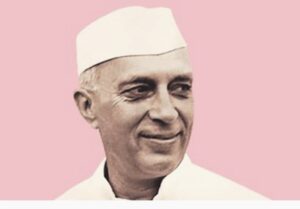
JAWHAR LAL NEHRU BIO GRAPHY
Jawaharlal Nehru (1889-1964) was an Indian politician and the first Prime Minister of India, serving from 1947 until his death in 1964. He played a key role in the Indian independence movement and was a close associate of Mahatma Gandhi.
Nehru was born in Allahabad, India, on November 14, 1889, into a wealthy family. He was educated in India and later in England, where he studied law at the University of Cambridge. After returning to India, he became involved in the Indian independence movement and was imprisoned several times by the British colonial authorities.
In 1929, Nehru was elected the President of the Indian National Congress, a position he held for many years. He worked closely with Mahatma Gandhi and was a key figure in the non-violent civil disobedience campaign against British rule. Nehru was arrested and imprisoned several times during this period.
After India gained independence in 1947, Nehru became the first Prime Minister of India. He was a proponent of socialism and secularism, and he worked to modernize India’s economy and infrastructure. He was also instrumental in the drafting of the Indian Constitution, which was adopted in 1950.
Nehru was a respected international statesman and played an active role in international politics. He was a founding member of the Non-Aligned Movement, which aimed to promote the interests of developing countries, and he championed the cause of peace and disarmament.
Nehru’s legacy is significant in Indian history, as he played a crucial role in shaping the country’s political, social, and economic landscape. He is remembered for his vision of a modern, democratic, and secular India and for his commitment to promoting social justice and equality. He passed away on May 27, 1964, leaving behind a legacy that continues to inspire generations of Indians.
FAMILY BACKGROUND..
Jawaharlal Nehru, the first Prime Minister of India, came from a prominent political family. His family played an instrumental role in the Indian independence movement.
Jawaharlal Nehru was born on November 14, 1889, in Allahabad, India. His father, Motilal Nehru, was a successful lawyer and a prominent political figure. Motilal Nehru was a member of the Indian National Congress and served as its president twice.
Jawaharlal Nehru had three siblings – two sisters and a younger brother. His sisters were Vijaya Lakshmi Pandit, who later became a prominent politician and diplomat, and Krishna Hutheesing, who was a writer and socialite. His younger brother, S. Gopal Nehru, was a civil servant.
Jawaharlal Nehru’s family was wealthy and well-educated. His father, Motilal Nehru, sent him to study in England at the age of 16. He studied at Harrow School and later at Trinity College, Cambridge. He returned to India in 1912 and began practicing law.
Jawaharlal Nehru was married to Kamala Nehru in 1916. They had one daughter, Indira Gandhi, who later became the Prime Minister of India. Kamala Nehru was also actively involved in the Indian independence movement and was a member of the Indian National Congress.
Jawaharlal Nehru played a significant role in the Indian independence movement. He was a prominent member of the Indian National Congress and served as its president several times. He was also a close associate of Mahatma Gandhi, the leader of the Indian independence movement.
Jawaharlal Nehru became the first Prime Minister of India on August 15, 1947, after India gained independence from British rule. He served as Prime Minister until his death in 1964.
Jawaharlal Nehru’s family has continued to be active in Indian politics. His daughter, Indira Gandhi, served as the Prime Minister of India from 1966 to 1977 and again from 1980 to 1984. His grandson, Rajiv Gandhi, also served as the Prime Minister of India from 1984 to 1989. His great-grandson, Rahul Gandhi, is currently a prominent member of the Indian National Congress.
IMPORTANT ROLE AGAINST BRATISHERS
Jawaharlal Nehru played a pivotal role in India’s struggle for independence against British colonial rule. He was a prominent leader of the Indian National Congress, and his leadership and vision played a crucial role in shaping India’s political landscape.
Nehru was deeply committed to the idea of an independent India, free from British colonial rule. He was a staunch advocate of non-violent resistance and worked tirelessly to mobilize the masses against British rule.
One of Nehru’s most significant contributions to India’s independence struggle was his role in the Indian National Congress. He served as the President of the Congress on several occasions, and his leadership helped to unite the party and provide a coherent vision for India’s future.
Nehru was also a key figure in the negotiations that led to India’s independence in 1947. He was a member of the Congress’s negotiating team that worked with the British government to secure India’s freedom.
Throughout his political career, Nehru remained committed to the idea of a secular, democratic India. He believed that India’s future lay in embracing modernity, science, and technology, and worked to promote education and social welfare.
In conclusion, Jawaharlal Nehru played a crucial role in India’s struggle for independence against British colonial rule. His leadership and vision helped to shape India’s political landscape, and his commitment to democracy and secularism remain an inspiration to people across the world.
DEATH AND WILL DETAILS
he passed away on May 27, 1964. He died of a heart attack in his office at the age of 74.
As for his will, Nehru did not leave behind a formal will. However, he did express his wishes and thoughts regarding the distribution of his personal belongings and the management of his estate to his family and friends in his final days.
After his death, his personal belongings, including books, papers, and memorabilia were distributed among his family members and close associates. The Nehru Memorial Museum and Library in New Delhi was also established as a tribute to his legacy, and it houses many of his personal papers and belongings.
It’s worth noting that there were some controversies surrounding Nehru’s will, particularly in regards to his daughter Indira Gandhi’s inheritance. However, these controversies were largely resolved through legal channe.